
 VGR
VGR


Search Product
Can A Hair Dryer Kill Lice And Nits
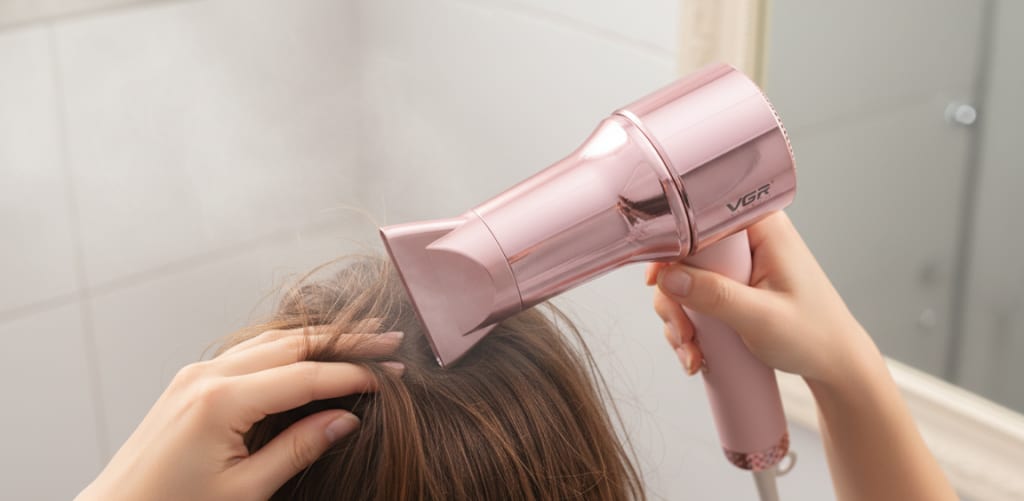
In theory, yes, hair dryers can really get rid of lice and eggs through the principle of “dehydration.” However, at the practical level, it is not only ineffective but also dangerous to take the ordinary hair dryer at home.
Although there are laboratory data showing that hot air can kill nearly 98% of insect eggs and 80% of hatched lice in a controlled environment, it is difficult for parents to replicate this effect at home. I usually don’t recommend hair dryers as the first choice of treatment for three main reasons:
- First, if you want to reach the temperature of scalding worms, it is too risky for the child’s delicate scalp, and it is easy to burn;
- Second, the wind of the ordinary hair dryer is so big and messy that it is easy to blow the live lice off the head and fall on the furniture or the brothers and sisters nearby, which expands the infection area;
- Third, household hair dryers cannot be heated evenly, and there will always be “cold zones” or dead corners. As long as a few survivors are missed, the entire life cycle will restart.
If you have to use hot air, it can only be regarded as an auxiliary means at best. The real solution to the problem depends on careful sorting. Don’t expect to cut the root by blowing alone.
⚠Listen to the advice before you start
The following content is purely popular science and does not constitute medical advice. Be sure to note that high-temperature hair dryers can easily cause thermal burns to children’s skin. In addition, it is absolutely forbidden to use hair dryers on hair that has been applied with chemical lice-removing potions. The ingredients of many potions are flammable, so don’t be careless.
Science Principle: How Does Heat Kill Lice?
Lice live mainly by keeping water. The so-called heat treatment, the core logic is “extreme dehydration.” When the heat and wind reach a certain combination, the protective shell of lice and eggs will dry and crack. If the eggs lose too much water, the embryos inside will collapse and cannot hatch.
There is nothing wrong with the theory, but the problem lies in the tools: the ordinary hair dryer in your bathroom usually cannot do this fine work.
Why Don’t I Recommend a Home Hair Dryer?
Relying on a hair dryer alone usually only brings frustration. Specifically, these 3 the most difficult pits to cross:
Risk Of Scalp Burns
This is the biggest hidden danger. To drain lice or eggs quickly, the air must be hot enough. But the scalp of a child is much more sensitive than that of an adult.
- The paradox of continuous heating: in order to kill the parasites, you need to blow against an area for some time. It’s no use shaking it.
- Danger zone: When the temperature is high enough to kill lice, it often damages the child’s skin. The operating space in the middle is too small to maintain enough lethal time without hurting the child.
“Diffusion” Effect
Ordinary hair dryers are designed to dry hair quickly with strong wind, and this chaotic high-speed airflow is a disaster for moving parasites.
- Airflow chaos: Strong winds don’t just heat the lice, they “bomb” them. Because adults are crawling, strong currents will blow them directly off their hair.
- Secondary pollution: As a result, the live lice did not die, but were blown onto carpets, sofas, bedding, and even the parents watching nearby.
Cool Spots
The heat of the wind blown by the household hair dryer is uneven, and there will always be a so-called “cold zone” on the scalp.”
Lice’s desire to survive: Lice are sensitive to temperature changes. When they feel that an area is getting hot, they will instinctively climb to a cool place (usually behind their ears or neck) and avoid the wind.
Resurgence: As long as a few mother lice or a few live eggs hide in these cold zones and survive, the infection will continue. Because ordinary hair dryers cannot heat the whole scalp at the same time and evenly, it is almost impossible to eradicate it completely in terms of probability.
If You Have To Use It, How Should You Use It?
If you insist on adding a hair dryer to the lice removal process, please strictly position it as an auxiliary measure, not a cure. It is not a substitute for physical removal.
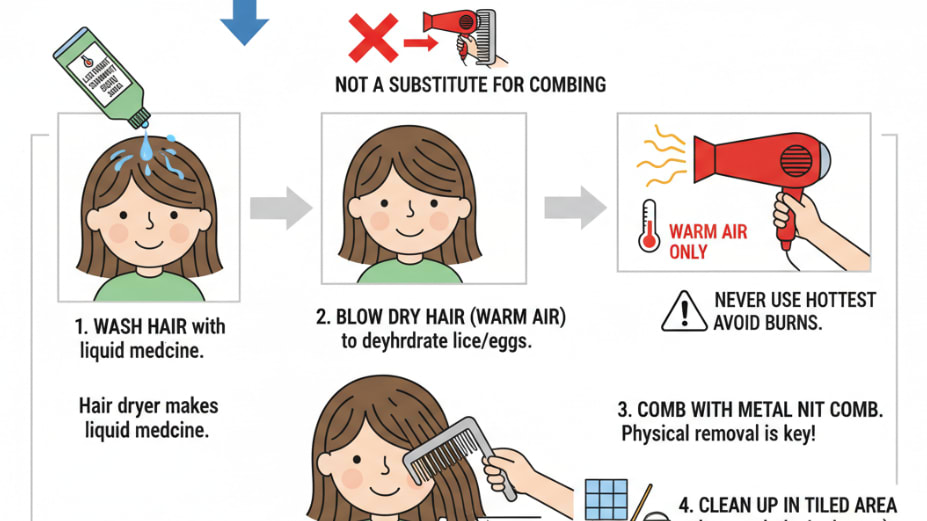
- Cooperating with combing is the correct solution: the most effective way to use the concept of “dehydration” is to blow dry the hair that has been washed with liquid medicine with a hair dryer for subsequent combing.
- Safety inspection: use the warm air gear, never use the hottest gear, and don’t burn the children.
- The real play: After the hair is blow-dried, use a high-quality metal compact comb. The hair dryer may have dried out some of the eggs, which will make them a little better to comb, or lose their activity, but the real tool to get this trouble off the head is the comb.
- Site control: It is best to do it in a place that is easy to clean (such as a tiled bathroom). If you really blow down the live bugs, you can also clean them up.
Author:Sarah Jenkins
As a certified lice treatment specialist with over a decade of experience, I help frustrated parents navigate infestations with safe, science-backed methods. My focus is on effective removal techniques that protect your child’s sensitive scalp from harmful home remedies and heat damage.
